When a burglar alarm sounds, the noise is only one part of the protection. With a monitored system, the signal can also be assessed and passed to the right people, so an alarm event is not left unmanaged.
Understanding that response path helps you choose the right setup, keep your contacts prepared and reduce the chance of missed alerts when your property needs attention.
What a monitored burglar alarm does when it activates
A standard burglar alarm is designed to detect unauthorised entry and raise an audible alert. A monitored burglar alarm goes further by sending an activation signal to a monitoring centre or nominated response route, depending on how the system has been designed.
The trigger may come from a door contact, motion sensor, panic button, vibration detector or another connected device. Once the system recognises the event, it communicates the alarm signal using the agreed signalling method. This may involve a dedicated connection, mobile signal, broadband connection or a combination, depending on the installation.
The important point is that the alarm is not relying only on someone nearby hearing it. A monitored setup creates a response process. That process can help when the property is empty, when neighbours are unavailable, when staff are off site or when a homeowner is asleep, travelling or unable to check the alarm themselves.
If you are comparing different types of alarm systems, Forrest Security explains its wider security services, including burglar alarms, CCTV, access control and panic alarm systems.
The typical monitoring response path
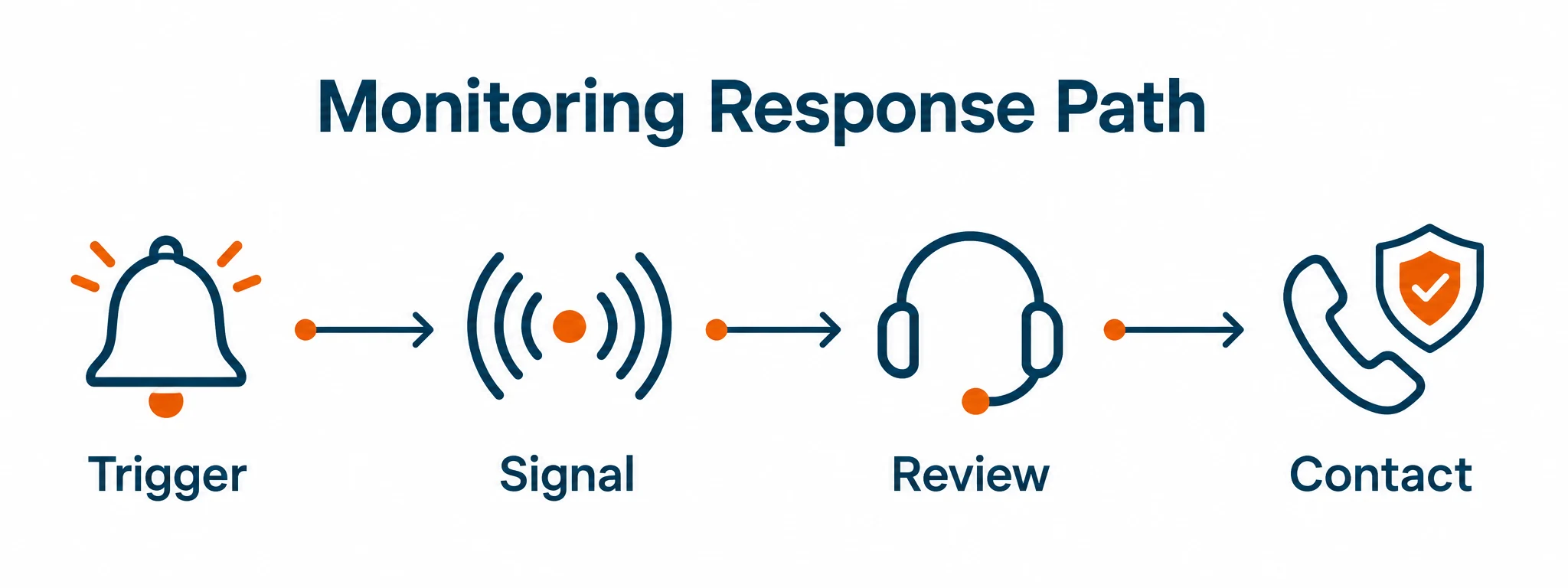
Although exact arrangements vary, a monitored burglar alarm usually follows a clear chain of events. The system detects activity, sends a signal, the signal is received and the event is assessed against the agreed response plan.
- The detector activates after sensing movement, entry or another configured condition.
- The alarm control panel checks the signal and starts the programmed alarm response.
- The monitoring route receives the activation details, often including the type of signal and the zone involved.
- The monitoring team or automated alert process follows the agreed call list or escalation plan.
- Keyholders, site contacts or other approved responders are notified.
- Where the system and response plan support it, further escalation may be requested following the relevant verification steps.
This structure is useful because it avoids guesswork. Instead of someone wondering whether an alarm is genuine, the response plan gives clear instructions for who should be contacted and what should happen next.
For many properties, the details matter. A front entrance activation during closed hours may need a different response from a staff only area during the working day. A well configured alarm helps the monitoring process understand the context rather than treating every signal as the same.
Who is alerted after an alarm trigger
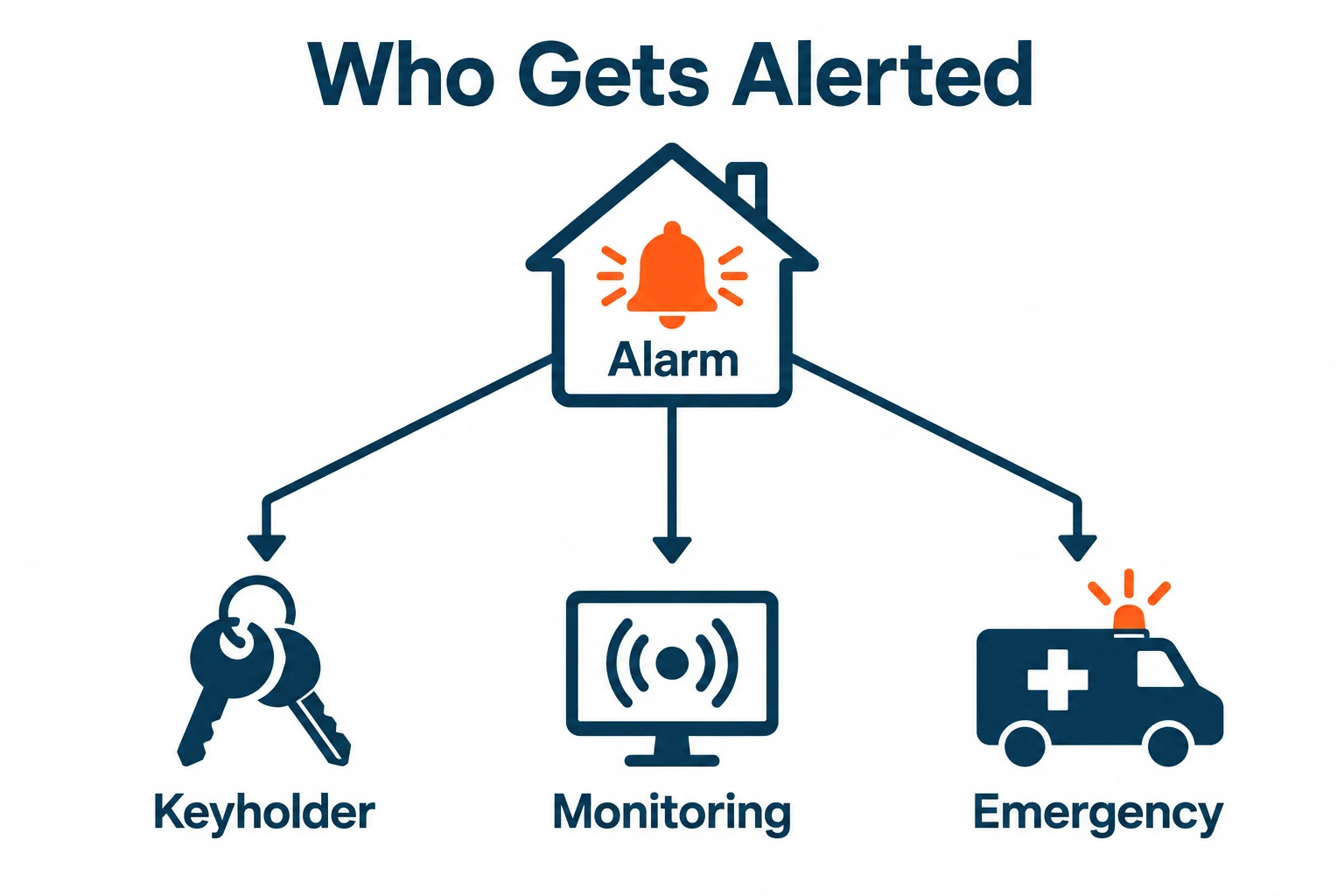
The people alerted depend on the type of monitoring and the response plan agreed during setup. In many cases, the first alerts go to named keyholders. These are trusted people who can be contacted if the alarm activates and who understand what action they are expected to take.
A keyholder might be an owner, manager, family member, facilities contact or another authorised person. Their role is not simply to receive a call. They need to know whether they should attend, check cameras, speak with staff, contact another responder or wait for further instructions.
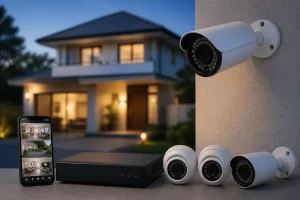
Some monitored systems can also work alongside CCTV or access control, giving a clearer picture of what may be happening. For example, camera coverage can help confirm whether movement is likely to be a genuine security concern, while access control records can help show whether someone entered using an authorised method.
Forrest Security has also written about integrating fire and intruder alarms, which is useful if you are thinking about how different safety and security systems can support a more organised response.
Where police response is part of the arrangement, it is normally subject to the correct system design, verification standards and account setup. That is one reason professional advice is so important. A monitored alarm should be planned around the response you genuinely need, not just the sounder on the wall.
Why some alarm events are missed or poorly managed
Missed or unmanaged alarm events usually happen because the response path has weaknesses. The alarm may work, but the people and processes around it may not be ready.
Common issues include outdated keyholder numbers, unclear instructions, weak mobile signal, poor detector placement, ageing equipment, low batteries, untested communication paths or a system that has been changed without updating the monitoring details. Even simple details, such as a contact going on holiday, can affect how quickly an alarm event is handled.
False alarms can also create problems. If a system activates repeatedly for avoidable reasons, people may start to treat alerts as less urgent. Causes can include loose fittings, draughts, pets, incorrectly placed sensors, damaged contacts, user error or equipment that needs attention.
If your alarm has started behaving unpredictably, the guide to signs your burglar alarm needs professional repair covers warning signs worth taking seriously before they turn into bigger reliability issues.
A monitored alarm is at its best when the system, the contact list and the response plan all match the way the property is actually used. That means thinking about opening times, access routes, staff changes, vulnerable areas, pets, contractors and who can realistically respond at different times.
How professional setup improves the response

Professional setup is about more than fitting devices. It is the process of designing an alarm that detects the right risks, communicates reliably and gives responders useful information.
A good installer will look at likely entry points, movement paths, vulnerable rooms, daily routines and the practical response needed after an activation. They can then recommend suitable detectors, sensible zoning and a control panel setup that supports monitoring properly.
Correct zoning is especially valuable. If an alarm report shows which part of the property was triggered, the response can be more focused. A single vague alarm signal is less helpful than knowing whether the activation relates to an entrance, corridor, stock area, office or outbuilding.
Professional setup also reduces nuisance activations. Detectors need to be positioned with care, configured correctly and tested under real conditions. Where pets, heating, sunlight, shutters, ventilation or regular movement could affect detection, the installer can choose equipment and settings that suit the environment.
The choice of detector matters too. If you want more background on that, Forrest Security has a helpful article on the role of motion sensors in advanced burglar alarms.
Maintenance is part of the same picture. Regular checks help confirm that sensors, sounders, batteries, communication paths and user settings are still working as intended. It also gives you a chance to update keyholders and response instructions before an emergency exposes a gap.
What to do before and after an activation
The best response starts before an alarm ever activates. Make sure all named contacts know they are on the list and understand what to do if they receive a call or alert. Keep phone numbers current, remove people who no longer need access and review instructions whenever your routine changes.
Everyone who uses the alarm should know how to set and unset it correctly. They should also understand entry and exit routes, codes, tags and what to do if they make a mistake. Many avoidable activations happen because users are unsure how the system is meant to behave.
After an activation, treat the event as useful information. Check what triggered, whether the right people were alerted and whether the response was clear. If the cause was accidental, fix the cause rather than simply resetting the panel and moving on.
If the event was suspicious, avoid entering an unsafe property alone. Follow the agreed process, keep keyholders informed and arrange professional inspection if any part of the system may have been damaged or tampered with.
Over time, these small checks make monitoring more effective. A burglar alarm is not just a box that makes a noise. It is a security process, and that process works best when the equipment, people and instructions stay aligned.
- A monitored burglar alarm sends an activation signal into an agreed response process, rather than relying only on an audible sounder.
- The response path usually includes detection, signal transmission, assessment and contact with approved keyholders or responders.
- Professional setup helps reduce missed events by improving detector placement, zoning, signalling and response instructions.
- False alarms should be investigated because repeated nuisance activations can weaken confidence in the system.
- Contact lists, user training and maintenance are all part of keeping alarm monitoring reliable.
Frequently asked questions
Does a monitored burglar alarm always contact the police?
Not always. Police response depends on the type of monitoring, verification method and account setup. Many systems first alert keyholders or a monitoring centre, then follow the agreed escalation process.
What happens if a keyholder does not answer?
The monitoring plan should include a contact order, so another authorised person can be tried. This is why it is important to keep contact details current and choose people who can respond reliably.
Can CCTV help with alarm monitoring?
Yes. Where CCTV is properly integrated or available to authorised users, it can help confirm what may have caused an alarm and support a more informed response.
How often should a monitored alarm be reviewed?
It is sensible to review it whenever users, routines or risks change, and to keep up with regular maintenance. This helps confirm that equipment, signalling and response instructions still suit the property.
Need advice on burglar alarm monitoring?
Forrest Security can help you choose, set up and maintain a burglar alarm system that gives clear alerts and a dependable response path.